
1. Writing and Publishing a Blog
This SOP explains how to select an assigned SEO topic, generate a complete article using GoHighLevel’s AI Blog Builder, review and publish it, request indexing through Google Search Console, and share it in the E-Z Tutoring Facebook group.
September 2026
| Done | Week | SEO Topic | Primary Keyword |
|---|---|---|---|
| Week 1 | August 2026 SAT Scores Are Out: What Your Score Means and What to Do Next | August 2026 SAT score release | |
| Week 1 | September 2026 SAT Predictions: Topics, Difficulty, and Last-Minute Preparation | September 2026 SAT predictions | |
| Week 2 | September 2026 SAT Last-Minute Predictions and Test-Day Checklist | September 2026 SAT last-minute predictions | |
| Week 2 | September 2026 SAT Recap: Was the Test Harder Than Expected? | September 2026 SAT test recap | |
| Week 3 | October 2026 SAT Predictions: What Students Should Start Preparing for Now | October 2026 SAT predictions | |
| Week 3 | October 2026 SAT Registration Deadline: Dates, Late Fees, and What to Know | October 2026 SAT registration deadline | |
| Week 4 | September 2026 SAT Scores Are Out: Should You Retake the SAT in October? | September 2026 SAT score release | |
| Week 4 | October 2026 SAT Final Predictions: Most Important Math and Reading Topics | October 2026 SAT final predictions |
October 2026
| Done | Week | SEO Topic | Primary Keyword |
|---|---|---|---|
| Week 1 | October 2026 SAT Predictions: What to Expect on the October 3 Test | October 2026 SAT predictions | |
| Week 1 | October 2026 SAT Last-Minute Study Plan: What to Do Before Test Day | October 2026 SAT last-minute study plan | |
| Week 2 | October 2026 SAT Recap and Score Predictions: How Difficult Was the Test? | October 2026 SAT score predictions | |
| Week 2 | November 2026 SAT Predictions: What to Study After the October SAT | November 2026 SAT predictions | |
| Week 3 | October 2026 SAT Scores Are Out: How to Understand Your Results | October 2026 SAT score release | |
| Week 3 | Should You Retake the SAT in November After Receiving Your October Scores? | retake SAT in November 2026 | |
| Week 4 | November 2026 SAT Registration Deadline: Everything Students Need to Know | November 2026 SAT registration deadline | |
| Week 4 | November 2026 SAT Predictions: Math and Reading Topics Most Likely to Matter | November 2026 SAT topic predictions |
November 2026
| Done | Week | SEO Topic | Primary Keyword |
|---|---|---|---|
| Week 1 | November 2026 SAT Final Predictions: What to Expect on the November 7 Test | November 2026 SAT final predictions | |
| Week 1 | November 2026 SAT Last-Minute Checklist: What to Do Before Test Day | November 2026 SAT last-minute checklist | |
| Week 2 | November 2026 SAT Recap and Score Predictions: Was the Test Difficult? | November 2026 SAT score predictions | |
| Week 2 | December 2026 SAT Predictions: What Students Should Study Next | December 2026 SAT predictions | |
| Week 3 | November 2026 SAT Score Release: When Scores Come Out and What Happens Next | November 2026 SAT score release | |
| Week 3 | December 2026 SAT Predictions: The Most Important Topics to Review | December 2026 SAT topic predictions | |
| Week 4 | November 2026 SAT Scores Are Out: Should You Retake the SAT in December? | November 2026 SAT scores | |
| Week 4 | December 2026 SAT Registration Deadline and Last-Minute Registration Guide | December 2026 SAT registration deadline |
December 2026
| Done | Week | SEO Topic | Primary Keyword |
|---|---|---|---|
| Week 1 | December 2026 SAT Final Predictions: What to Expect on the December 5 Test | December 2026 SAT final predictions | |
| Week 1 | December 2026 SAT Last-Minute Study Plan and Test-Day Checklist | December 2026 SAT last-minute study plan | |
| Week 2 | December 2026 SAT Recap and Score Predictions: How Hard Was the Test? | December 2026 SAT score predictions | |
| Week 2 | What to Do After the December SAT While Waiting for Your Scores | what to do after December SAT | |
| Week 3 | December 2026 SAT Scores Are Out: How to Understand Your Results | December 2026 SAT score release | |
| Week 3 | December 2026 SAT Scores: Should You Retake the SAT in March 2027? | retake SAT March 2027 | |
| Week 4 | 2027 SAT Test Dates and Deadlines: How to Plan Your Testing Schedule | 2027 SAT test dates | |
| Week 4 | March 2027 SAT Predictions: How to Start Preparing During Winter Break | March 2027 SAT predictions |
These topics are scheduled around the official fall 2026 SAT calendar. Before creating each article, confirm that its dates and deadlines are still accurate using the College Board website.
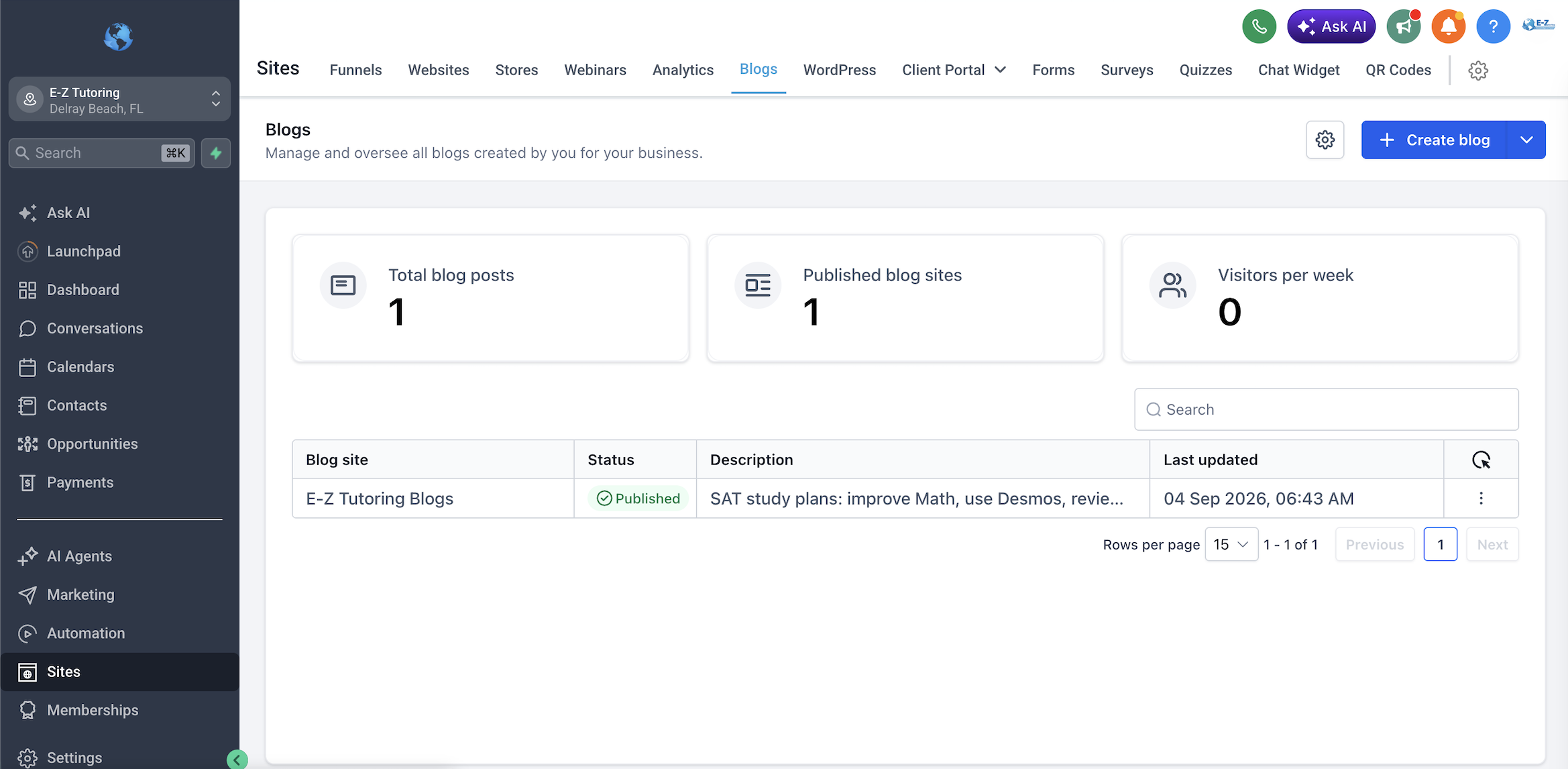
Tip: Click the image to open a larger preview.
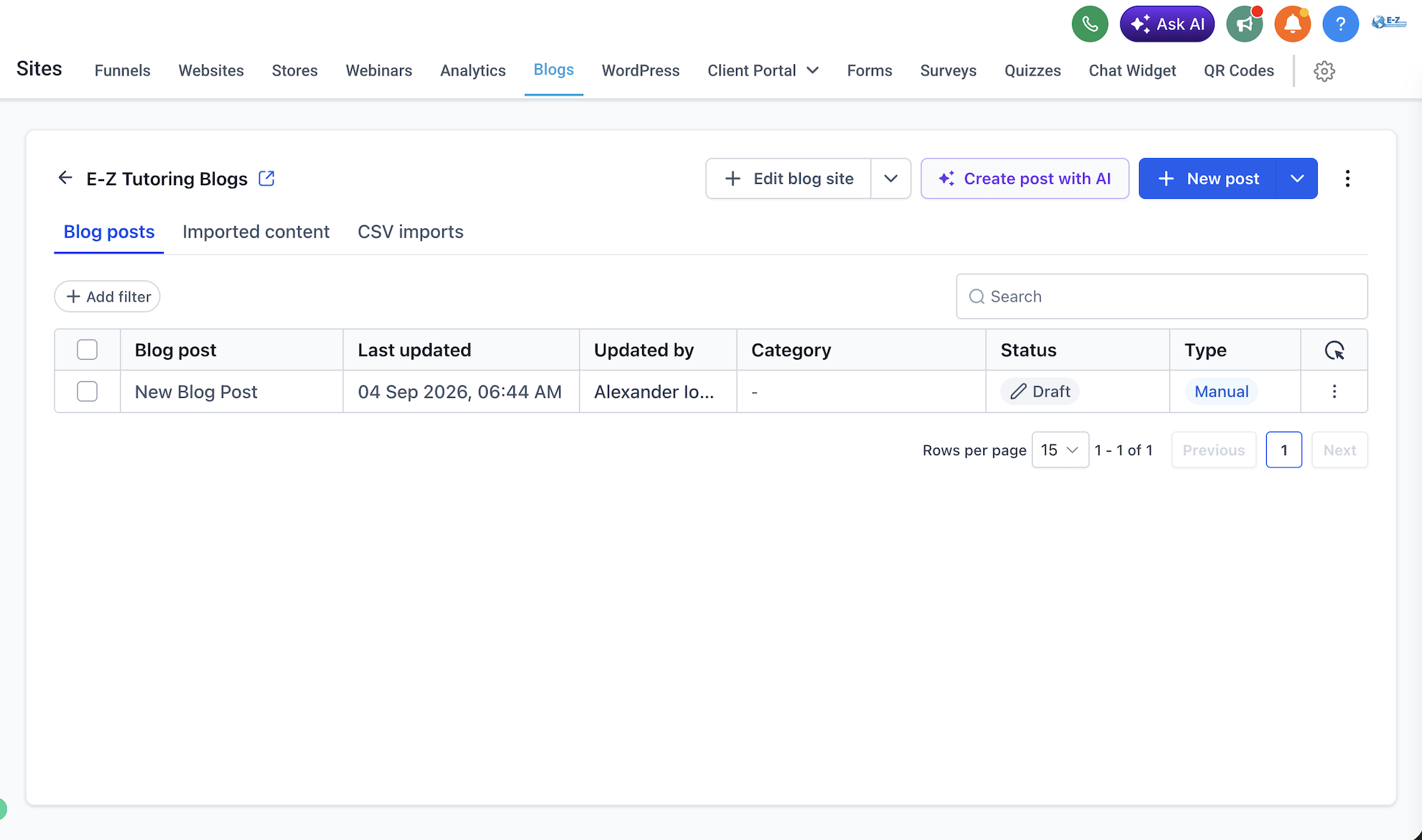
What to look for: The “Create Post With AI” button before starting the AI flow.
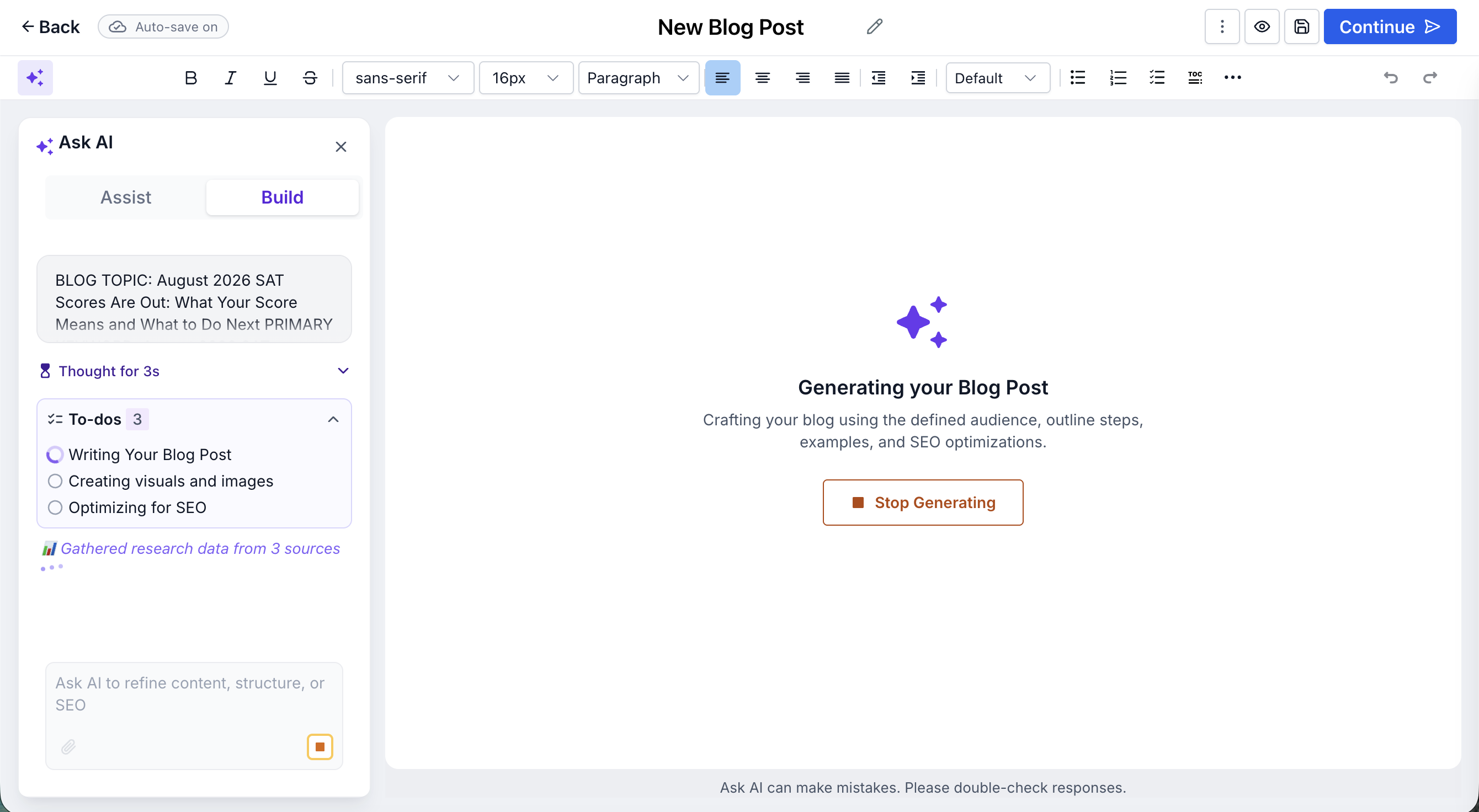
Tip: Click the image to open a larger preview.
Never publish an AI-generated article without reviewing it. Confirm that all SAT dates, deadlines, policies, statistics, links, and score information are accurate.
BLOG TOPIC: [INSERT THIS WEEK’S SEO TOPIC]

PRIMARY KEYWORD: [INSERT THIS WEEK’S PRIMARY KEYWORD]

Create a complete, publication-ready blog post for E-Z Tutoring using the topic and primary keyword above.

Research and determine everything else, including the search intent, target audience, secondary keywords, related questions, appropriate article length, structure, authoritative sources, image plan, SEO metadata, internal-linking opportunities, and the most appropriate CTA.

Research the topic before writing. Use current, authoritative primary sources whenever possible. For official SAT dates, scoring, Bluebook, registration, policies, and test information, prioritize the College Board.

Verify every date, deadline, policy, statistic, score requirement, and factual claim. Never invent facts, quotations, testimonials, statistics, student results, or E-Z Tutoring experiences. If something cannot be verified, omit it or clearly mark it for human review.

Write for high-school students and their parents in a confident, clear, practical, and expert tone. The article should sound like it came from an experienced SAT educator, not a generic AI writer.

Use direct answers, short paragraphs, useful examples, numbered steps, bullet points, checklists, and tables when appropriate.

Avoid filler, repetition, keyword stuffing, fake urgency, unsupported score guarantees, exaggerated claims, fake personal stories, and generic AI phrases such as “in today’s fast-paced world,” “unlock your potential,” “embark on a journey,” “delve into,” “game-changer,” or “navigating the landscape.”

Create one strong blog title that serves as the only H1. GoHighLevel may automatically display the post title as the H1, so do not insert a second H1 inside the article body.

Immediately after the title, provide a concise two-to-four-sentence answer to the article’s main question. It should make sense independently if quoted by Google, an AI Overview, a voice assistant, or another answer engine.

Then include:

1. A concise introduction explaining who the article is for and what the reader will learn.
2. A comprehensive body organized with descriptive H2 headings.
3. H3 headings when an H2 section contains multiple distinct topics.
4. Practical examples, steps, checklists, or comparison tables when useful.
5. A Key Takeaways section.
6. A FAQ section with four to eight genuine follow-up questions.
7. A relevant final CTA.

Use the primary keyword naturally in the SEO title, URL slug, introduction, at least one appropriate heading, meta description, and body. Research and naturally include secondary keywords, synonyms, related questions, and relevant entities.

Do not target a specific keyword density or force the keyword into sentences. Write only as much as necessary to answer the search intent completely.

Create:

* One H1 title
* One SEO title
* A short lowercase URL slug with hyphens
* A unique meta description of approximately 140–160 characters when practical
* A short blog-card excerpt
* A recommended category
* Relevant tags and keywords
* A cover-image concept
* A descriptive image filename
* Accurate alt text
* A complete AI image-generation prompt

Optimize for traditional search and AI-powered answers by including a direct answer near the beginning, clear headings, concise answers beneath question headings, self-contained factual statements, clear definitions, specific dates and qualifications, and important information in visible text.

Clearly distinguish official facts from E-Z Tutoring recommendations. Link important factual claims to authoritative primary sources using descriptive anchor text.

Recommend two to five relevant internal links. Never invent E-Z Tutoring URLs. If an exact URL is unavailable, use a clear placeholder such as:

[INTERNAL LINK: Related E-Z Tutoring article about Bluebook practice tests]

Choose the CTA that best matches the article.

For individualized help, score analysis, a personalized plan, or private tutoring, use:

https://go.e-ztutoring.com/diagnostic

Button text:

Book Your Free SAT Diagnostic

For structured SAT Math preparation, upcoming SAT preparation, group instruction, or intensive programs, use:

https://offer.e-ztutoring.com/

Button text:

Explore the SAT Math Intensive

Include no more than one natural mid-article CTA and one final CTA. Do not use false urgency or guarantee a score increase.

Create a professional landscape cover image recommendation, ideally approximately 1200 × 630 pixels. It should be relevant, uncluttered, and consistent with E-Z Tutoring’s white and light-blue branding.

Do not place important information inside the image. Alt text must accurately describe the visible image and must not contain keyword stuffing.

Return the work in this order:

PART 1: SEO PUBLISHING DETAILS

* Search intent
* Target audience
* Primary keyword
* Secondary keywords
* Suggested category
* Suggested tags
* H1 title
* SEO title
* URL slug
* Meta description
* Blog-card excerpt
* Recommended author
* Suggested author bio
* Last-reviewed date
* Selected CTA
* CTA destination

PART 2: COVER IMAGE PACKAGE

* Cover-image concept
* Recommended filename
* Alt text
* Caption
* Complete image-generation prompt

PART 3: COMPLETE BLOG ARTICLE

Write the complete article ready to publish in GoHighLevel. Use proper H2 and H3 structure, short paragraphs, authoritative links, Key Takeaways, FAQs, and the selected CTA.

PART 4: INTERNAL-LINKING RECOMMENDATIONS

List each suggested destination, anchor text, and placement. Use placeholders instead of inventing URLs.

PART 5: SOURCES AND FACT-CHECK

List each source organization, page title, URL, and the claim it supports. Identify anything requiring human verification.

Before finishing, confirm that the article satisfies the search intent, opens with a direct answer, contains accurate and current information, provides more than generic advice, uses keywords naturally, contains no fabricated information, and includes the correct CTA.
Before continuing, quickly review the finished article:
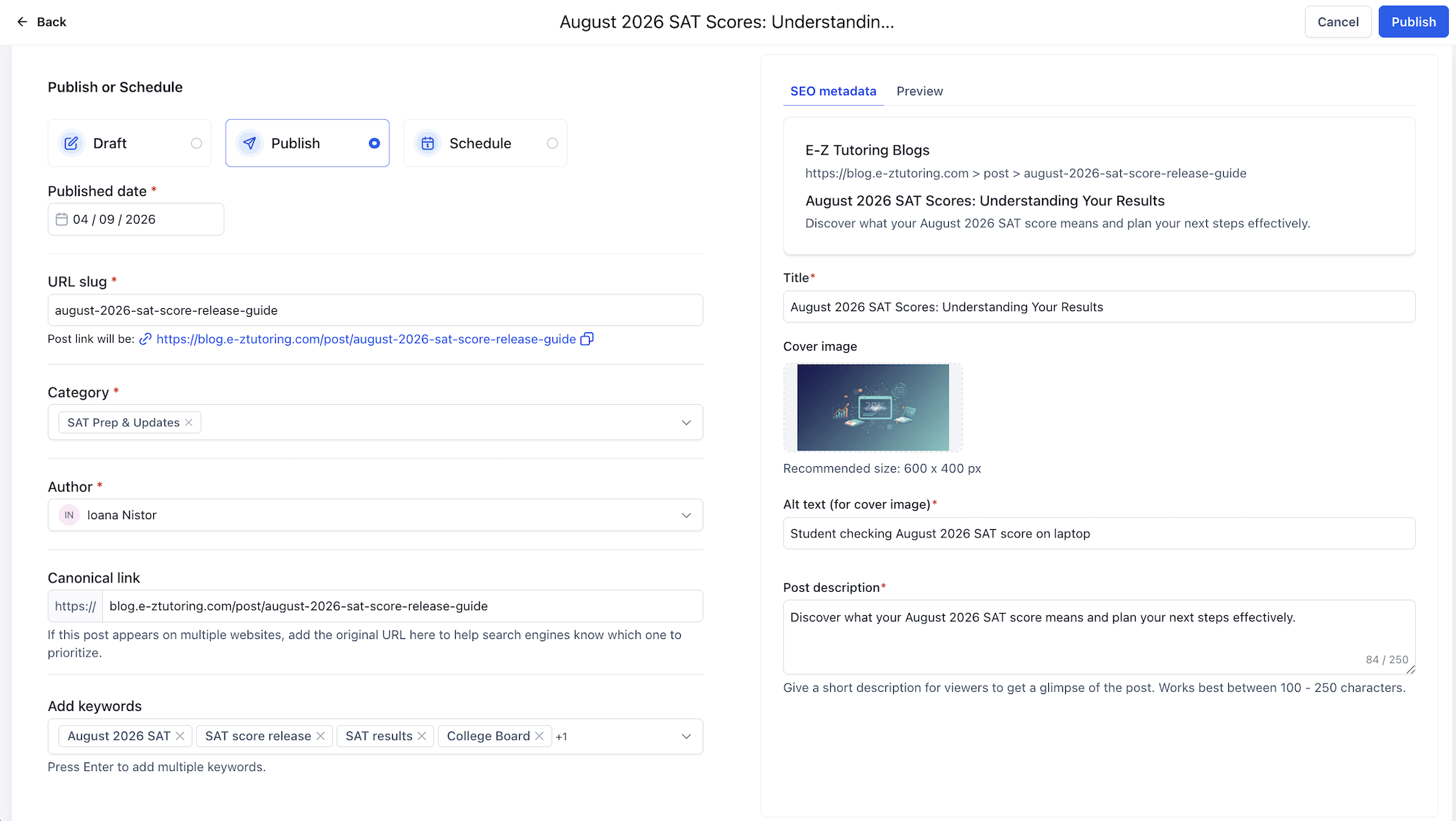
Blog settings and publishing screen
Requesting indexing does not guarantee immediate indexing. Do not repeatedly submit the same URL.
Do not copy the SEO publishing details, image-generation instructions, source log, internal notes, or AI prompts into Facebook. Only post the reader-facing article.
2. New Private Student
This SOP applies only when the student is completely new and does not already exist in our system. If the student already has a profile in the system, do not complete this onboarding process again.
The “New Onboarding” snippet directs the family to onboarding.e-ztutoring.com.
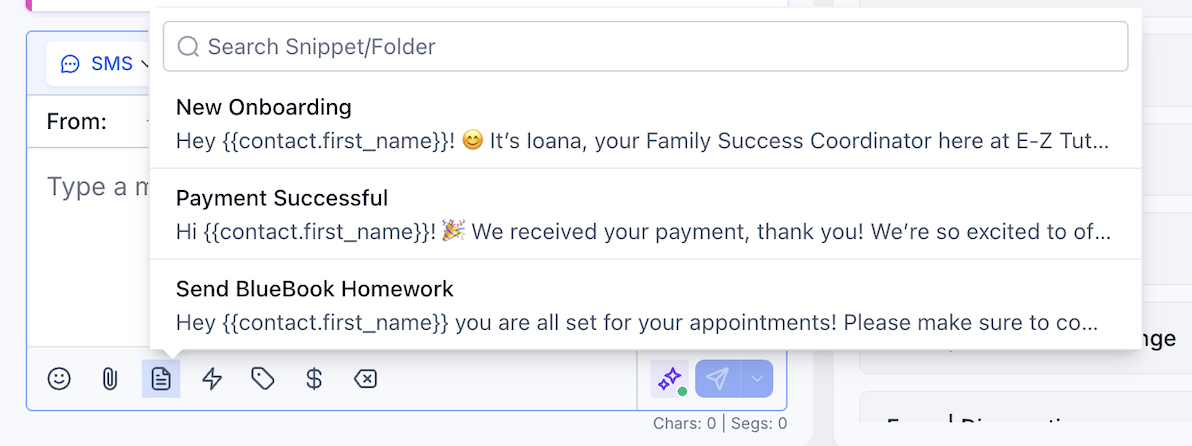
What to look for: Confirm the correct snippet is selected (“New Onboarding”) and that the message points the family to the onboarding form link. Tip: Click the image to open a larger preview.
Once the family completes the onboarding form, the system will automatically handle most of the onboarding process.
The administrative assistant will receive a notification when the onboarding form has been completed. Wait for this notification before moving to the final steps.
3. New Cohort Student
This SOP is only for a student who already exists in the system. Before beginning, confirm all three requirements below. If any requirement is not met, stop and resolve the missing profile(s) or contact link before continuing:
For cohort enrollments, never create or send an invoice. The assistant must use a payment link.
Select the correct payment link based on how far away the next SAT is, and send that link directly to the parent.
Cohort payments must always be collected through the correct payment link. Do not use invoices.
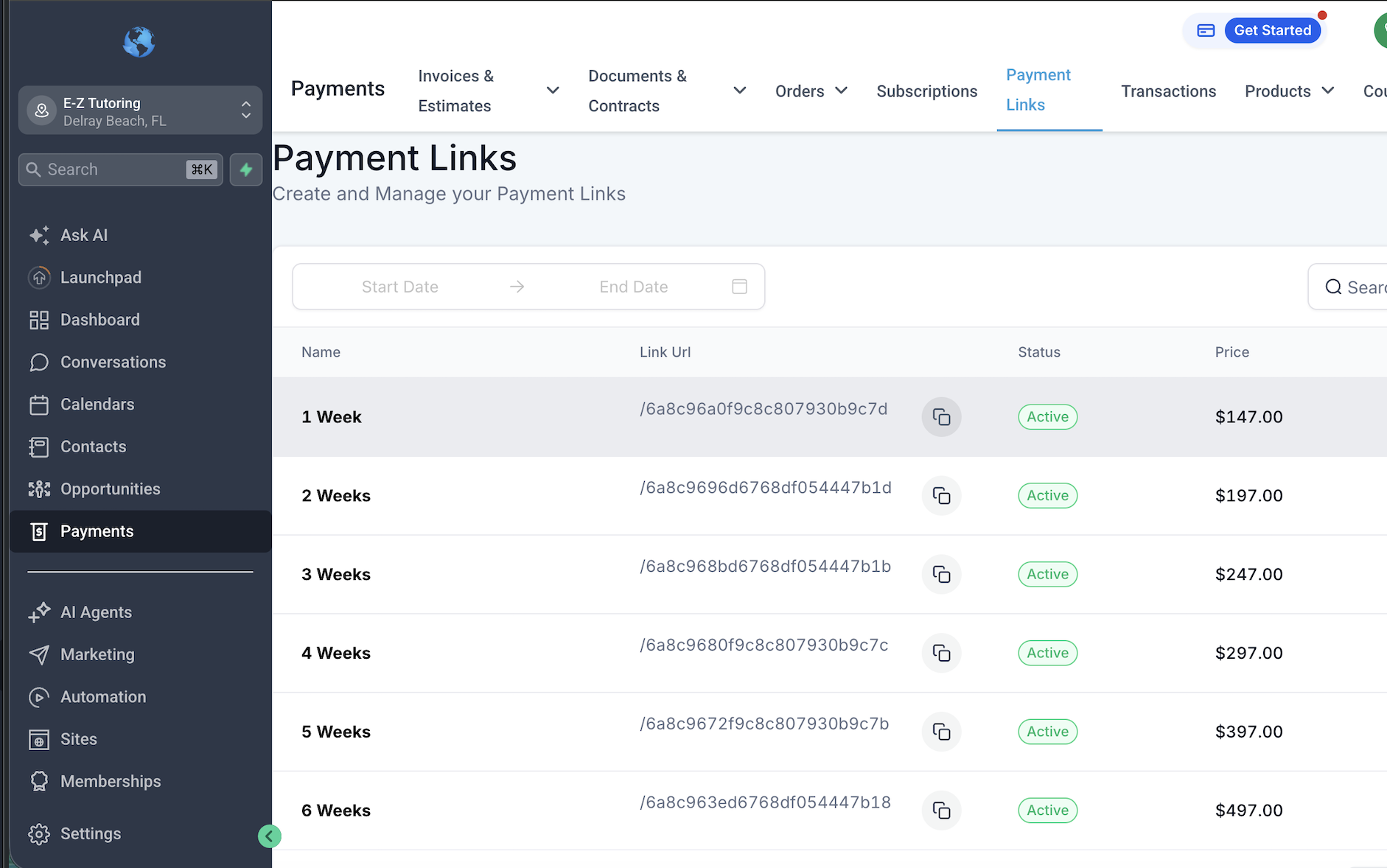
What to do here: Locate the payment links and select the correct link based on how far away the next SAT is. Tip: Click the image to open a larger preview.
Wait until the payment has been successfully completed before enrolling the student.
Do not manually enroll a student based only on a promise to pay or because the payment link was sent. Verify that payment was received first.
Once payment has been confirmed, go to:
cohorts.e-ztutoring.com/manual-enroll
The assistant will need to enter the system password, which she should already have securely saved. Do not display or store the system password anywhere on the public SOP page.
Complete the manual-enrollment form using the correct student, parent, payment, and cohort information.
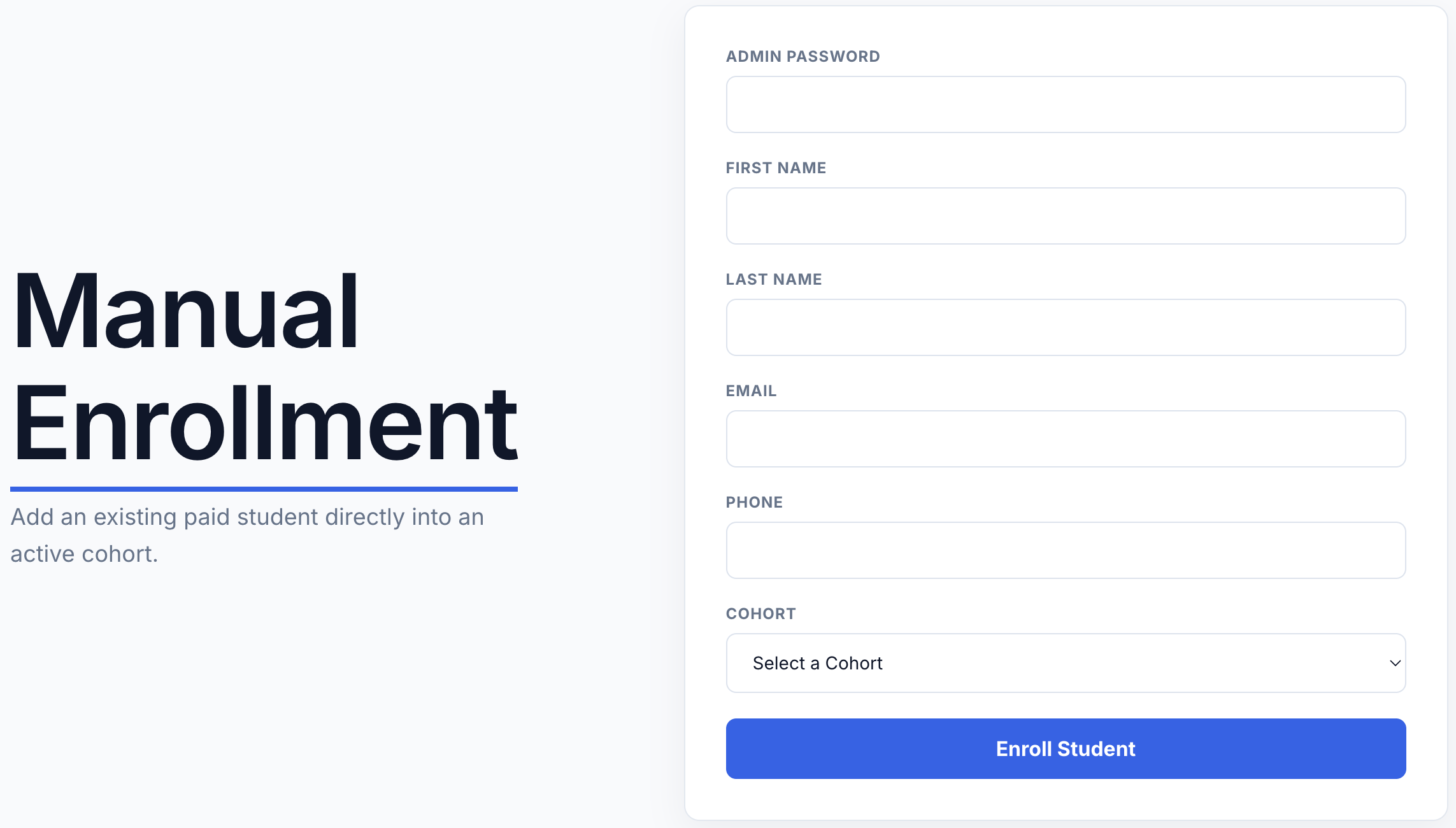
What to do here: Use the manual-enrollment page to enroll the student after payment is confirmed. Tip: Click the image to open a larger preview.
After the manual-enrollment form is successfully submitted, the system will automatically:
The assistant should not manually recreate anything already handled by the system.